
Apprentices in the electrical trades are graduating with strong hands-on skills.
Yet, many lack a solid foundation in documenting electrical systems-particularly within the digital environments that NFPA 70E and NFPA 70B now assume as baseline practice. As the industry shifts toward condition-based maintenance, traceable safety programs, and audit-ready records, this documentation gap has become one of the most critical-and solvable-challenges facing the trade. The emerging documentation gap.
Most apprenticeship and entry-level training programs continue to emphasize installation, basic troubleshooting, and code-compliant construction, while dedicating far less attention to system documentation and data integrity. New electricians are typically proficient at pulling wire, terminating equipment, and reading prints, but often have limited experience creating or maintaining one-line diagrams, recording protective device settings, or managing digital as-found and as-built records. At the same time, current NFPA 70E and NFPA 70B frameworks presuppose that accurate, up-to-date documentation serves as the foundation for electrical safety and maintenance programs. This creates a structural gap: employers increasingly need “documentation-literate” technicians, while apprenticeship pipelines still graduate primarily “tool-centric” craftworkers. In practice, this means facilities may appear compliant on paper, yet struggle to produce the drawings, study files, maintenance histories, and audit trails that today’s standards require. REALTIMEais.com was built specifically to address this gap-by making system documentation a natural, integrated part of field work rather than a disconnected engineering or administrative task.
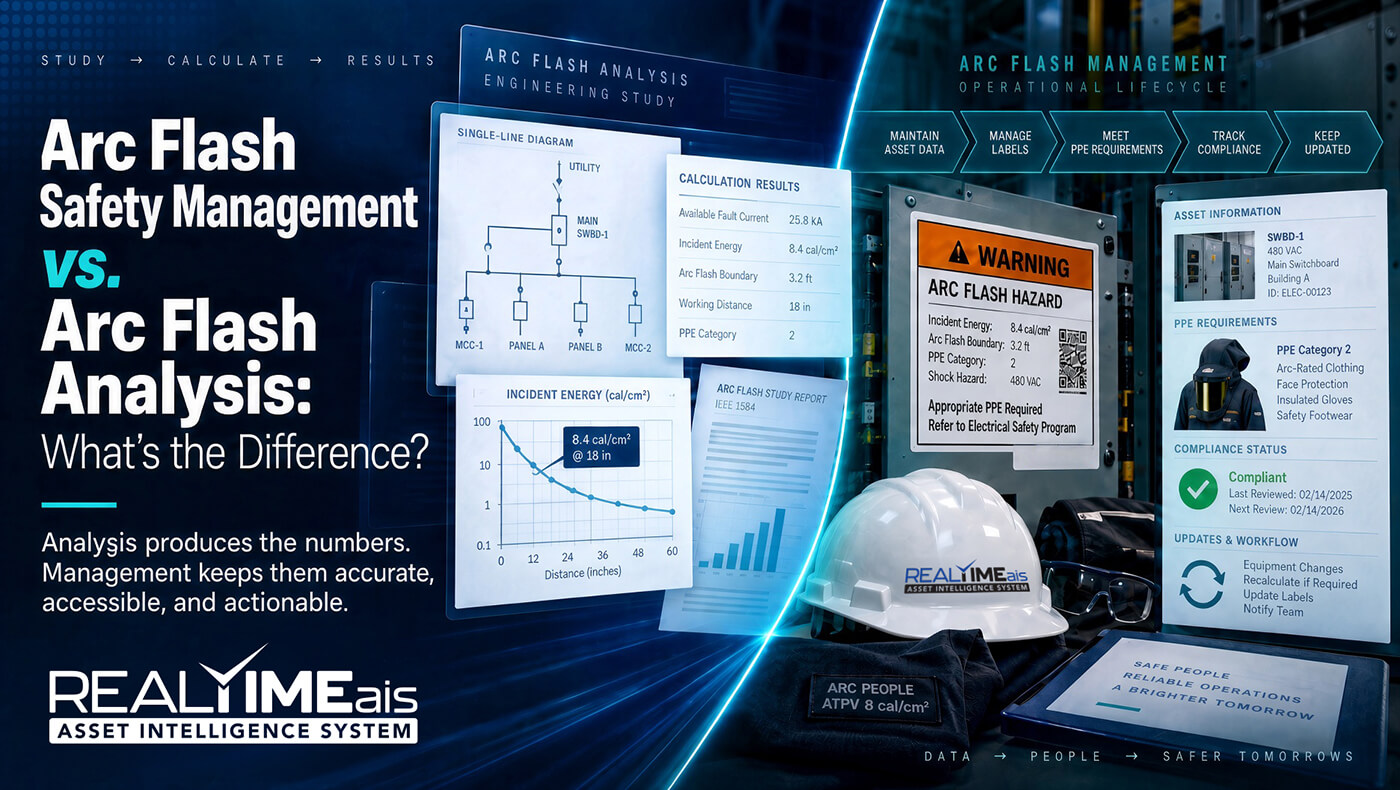
Digital one-lines, arc-flash study data, and electrical safety programs depend on accurate digital models of the electrical system. One-line diagrams, short-circuit and coordination models, and arc flash studies are no longer static, one-time engineering deliverables; they are living documents that must be updated whenever the system changes. NFPA 70E directly links job safety planning, risk assessments, and PPE selection to this documented system information, including arc flash labels derived from current study data. Yet very few apprentices receive structured training in collecting field data for studies, validating existing drawings, or updating digital one-line diagrams in commonly used platforms. This is where REALTIMEais.com changes the equation. By allowing technicians to collect nameplate data, photographs, field notes, and equipment relationships directly in the field-then tie that data to digital one-lines and study models-the platform turns documentation into a practical trade skill rather than an abstract engineering concept. As highlighted in prior discussions around “what to record at every panel” and “hidden assumptions in arc flash studies,” many high-impact errors stem from incomplete or inaccurate documentation, not from poor artistry. REALTIMEais.com helps prevent these failures by preserving traceability between field work, system models, and arc flash study data-ensuring that new installations or modifications do not silently invalidate safety analyses and labels. NFPA 70E: documentation as a safety tool NFPA 70E increasingly treats documentation as a primary risk-control mechanism rather than a paperwork afterthought. The standard requires a documented electrical safety program, documented job safety planning, and written risk assessments that describe hazards, risks, and protective measures for each task. It also mandates audits of both the program and field execution-audits that are only meaningful when system drawings, labels, and maintenance histories are accurate and up to date. However, most NFPA 70E training encountered by apprentices is short, code-focused, and centered on hazard awareness and PPE selection. It rarely builds the habit of tying each task back to system documentation. In effect, the industry teaches “how to work safely in front of a panel,” but not “how to document that panel so the next technician can work safely as well.” REALTIMEais.com directly supports NFPA 70E’s intent by embedding documentation into daily workflows. Job planning, equipment identification, arc-flash references, photographs, and task records all live in a single, connected system. This creates the closed loop that 70E envisions-planning, execution, and documented feedback-without adding administrative burden to the field. NFPA 70B and the maintenance program burden.
The 2023 transition of NFPA 70B from a recommended practice to a mandatory standard in many contexts significantly raised expectations for electrical maintenance documentation. Facilities are now expected to implement a documented Electrical Maintenance Program (EMP) with defined methods, inspection and testing plans, and auditable record retention. That EMP must link maintenance tasks, test results, and corrective actions directly to the actual electrical system configuration. This is where the apprentice-to-journeyman pipeline is often weakest. Graduates rarely leave training programs having written a maintenance procedure, completed a formal maintenance record, or updated a digital equipment database to reflect field work. Meanwhile, NFPA 70B expects maintenance personnel to operate within structured, documented programs that maintain traceable histories for breakers, transformers, and other critical assets. REALTIMEais.com bridges this gap by providing an NFPA 70B-aligned EMP framework that technicians can actually use. Maintenance tasks, inspection intervals, test results, photos, and corrective actions are all tied directly to specific assets and system configurations. The platform ensures that maintenance documentation is not only captured but also structured to support audits, risk prioritization, and long-term asset planning. Closing the classroom-field divide. Closing the documentation gap will require apprenticeship sponsors, JATCs, and employers to treat documentation as a core trade competency-on par with bending conduit or interpreting the NEC. Just as importantly, it requires tools that make documentation practical, intuitive, and field-driven.
By incorporating platforms like REALTIMEais.com into training and field operations, apprentices can learn to:
• Build and validate digital one-line diagrams from field walks, photographs, and nameplate data.
• Complete NFPA 70E job safety plans that reference real system drawings, labels, and arc flash data.
• Execute and document NFPA 70B maintenance tasks within a structured Electrical Maintenance Program.
• Demonstrate compliance during audits using verifiable digital records, not verbal explanations. For facilities, the implication is clear: technical skill alone is no longer sufficient to meet modern NFPA 70E and NFPA 70B expectations.
The organizations that succeed will be those that intentionally develop electricians who are not only qualified to work on energized systems but also fluent in the digital documentation that defines a safe, compliant, and defensible electrical workplace. REALTIMEais.com exists to make that transition achievable-turning documentation gaps into a competitive advantage.