

1. Defining Electrical Asset Intelligence
Electrical Asset Intelligence (EAI) is the practice of using purpose-built software to centralize the management, monitoring, compliance, and predictive maintenance of an organization’s electrical infrastructure – from the utility service entrance through every switchgear, transformer, panelboard, motor control center, disconnect, protective device, and branch circuit in a facility.
Unlike generic maintenance management systems that treat electrical equipment as just another asset category alongside HVAC units, plumbing fixtures, and roof systems, Electrical Asset Intelligence platforms are designed exclusively for the unique requirements of electrical systems: NFPA 70B compliance, arc flash safety management, condition-based maintenance intervals, real-time thermal monitoring, and the complex asset hierarchies that define how electrical power flows through a building.
The term reflects a fundamental shift in how organizations think about their electrical infrastructure. For decades, electrical equipment maintenance was either handled reactively (fix it when it breaks), managed through generic CMMS platforms that lack electrical-specific logic, or documented on paper and spreadsheets that cannot scale. Electrical Asset Intelligence replaces all of these approaches with a unified, data-driven system built for the specific physics, regulations, and failure modes of electrical equipment.
Electrical Asset Intelligence is purpose-built software that gives facility teams complete visibility into the condition, compliance status, maintenance history, and predicted risk of every electrical asset in their organization – in real time.
2. Why Electrical Equipment Needs Its Own Category
Every major asset class in facility management has evolved toward specialized management tools. Building automation systems manage HVAC. Energy management systems manage power consumption. Fire alarm systems have dedicated monitoring platforms. Security systems run on purpose-built software. Yet electrical distribution equipment – arguably the most critical infrastructure in any building, and the system most likely to cause catastrophic harm when it fails – has been managed with generic tools or no tools at all.
This gap exists for historical reasons. Until 2023, NFPA 70B was a recommended practice, not a mandatory standard. There was no regulatory forcing function that required organizations to maintain detailed, auditable records of their electrical maintenance programs. Most facilities could get by with annual thermographic surveys, occasional breaker testing, and a filing cabinet full of paper inspection reports.
Three converging forces have made that approach obsolete:
2.1 NFPA 70B Is Now Mandatory
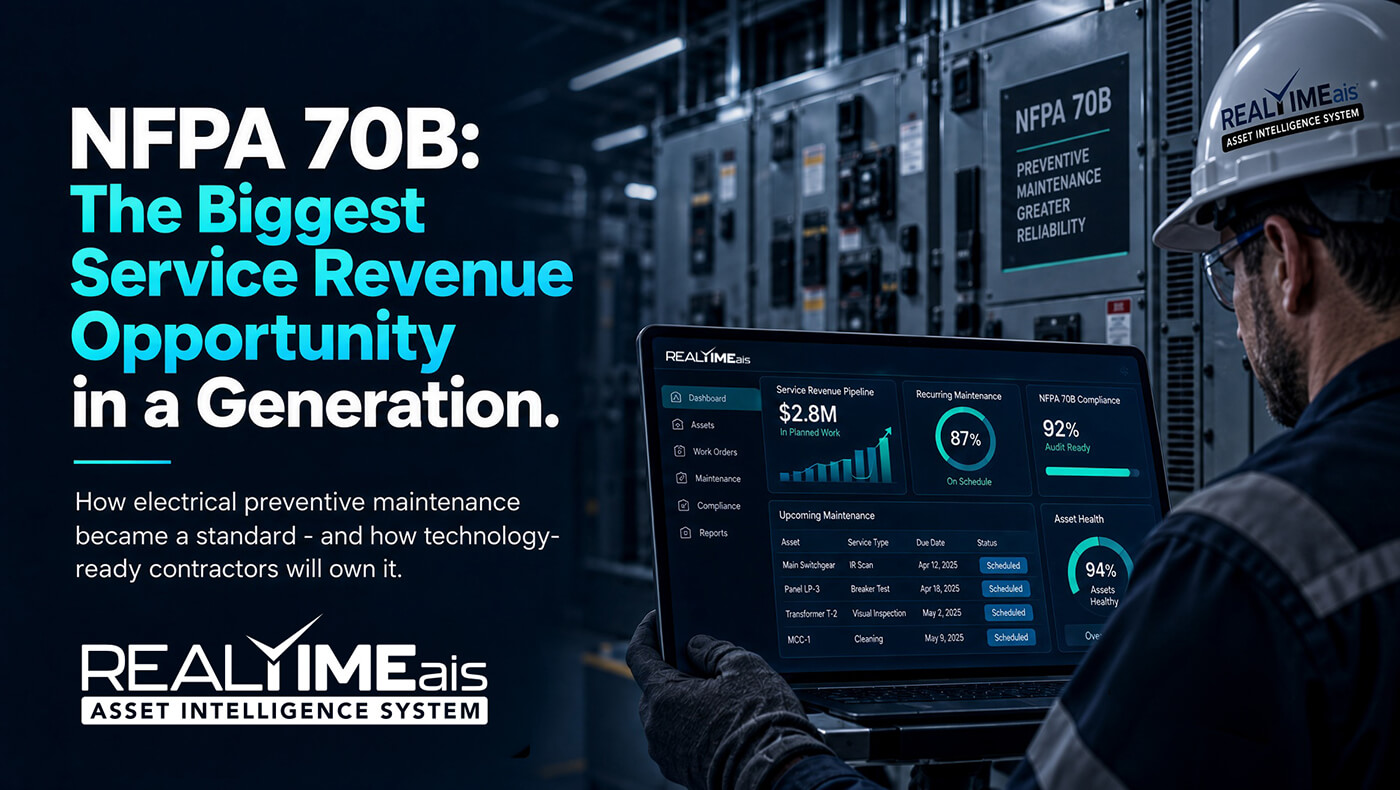
The 2023 reclassification of NFPA 70B from a recommended practice to a mandatory standard means that jurisdictions can now adopt it as enforceable code, OSHA can reference it in citations, and insurance carriers can require it as a condition of coverage. Compliance requires a documented Electrical Maintenance Program with condition assessments, dynamic maintenance intervals, and complete audit trails – none of which can be managed effectively in a generic CMMS.
2.2 Predictive Technologies Have Matured
Continuous infrared monitoring (FOTRIC AI cameras), hot-spot sensors (GraceSense HSM), partial discharge detectors, and power quality analyzers now generate real-time data streams about electrical equipment condition. These technologies produce actionable intelligence – but only if there is a system designed to ingest, correlate, and act on the data. Generic CMMS platforms have no mechanism to receive live sensor feeds and translate them into condition scores, work orders, and compliance documentation.
2.3 The Consequences of Electrical Failure Are Escalating
Arc flash incidents cause an average of 30,000 injuries per year in the United States alone. Equipment failures in data centers, hospitals, manufacturing plants, and food processing facilities can result in millions of dollars in downtime, product loss, and liability exposure. The financial and human cost of reactive electrical maintenance – waiting for equipment to fail before addressing it – has become unacceptable to facility operators, insurers, and regulators alike.
3. The Five Pillars of Electrical Asset Intelligence
A true Electrical Asset Intelligence platform delivers capabilities across five interconnected domains. These are not optional modules – they are the minimum requirements for managing electrical infrastructure in a post-NFPA-70B-mandatory world:
| Pillar | What It Does | Why Generic CMMS Can’t |
|---|---|---|
| 1. Asset Intelligence | Complete electrical asset inventory with topology mapping, nameplate data, single-line diagram integration, and real-time condition scoring using the NFPA 70B three-tier system. | CMMS asset trees are flat and generic. They cannot represent electrical system topology (feeder relationships, upstream/downstream dependencies) or dynamic condition levels. |
| 2. Compliance Engine | Automated NFPA 70B compliance tracking including EMP management, condition-driven maintenance scheduling, inspection checklists by equipment type, and audit-ready documentation. | CMMS uses static, time-based scheduling. It has no concept of NFPA 70B condition levels, no compliance scoring, and no regulatory-specific reporting. |
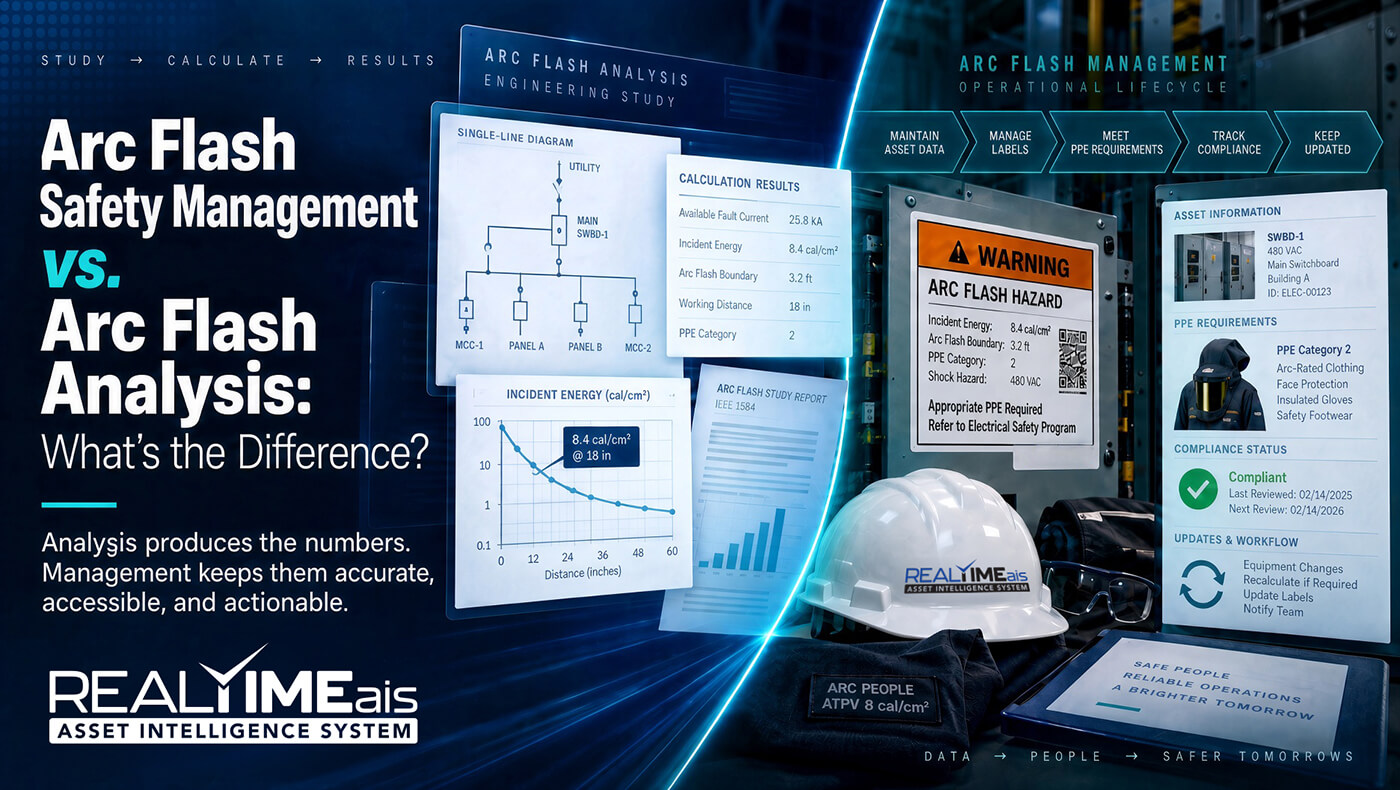
| 3. Safety Management | Arc flash risk assessment data management (IEEE 1584), incident energy tracking by asset, PPE requirement generation, approach boundary documentation, and NFPA 70E alignment. | CMMS has zero arc flash awareness. There is no connection between maintenance condition and safety risk – the core relationship that NFPA 70B and 70E together require. |
| 4. Predictive Analytics | Live integration with continuous monitoring technologies (IR cameras, hot-spot sensors, power quality analyzers) that feed real-time data into condition assessments and trigger automated alerts. | CMMS cannot ingest live sensor data. It is a work order system, not a monitoring platform. Sensor data stays siloed in vendor-specific dashboards. |
| 5. Workforce Readiness | Electrical safety training management (OSHA, NFPA 70E, arc flash awareness), qualification tracking by worker, and competency verification for maintenance procedures. | CMMS does not manage training or qualifications. Worker competency – a requirement of NFPA 70B – is tracked in a separate LMS or not tracked at all. |
REALTIMEais Delivers All Five Pillars
REALTIME Tool covers Pillars 1 and 2 (Asset Intelligence and Compliance Engine). REALTIME Risk covers Pillar 3 (Safety Management). Live API integrations with FOTRIC and GraceSense cover Pillar 4 (Predictive Analytics). REALTIME Worker covers Pillar 5 (Workforce Readiness). Together, these modules form The Electrical Intelligence System™ – the only platform that unifies all five pillars in a single environment.
4. Electrical Asset Intelligence vs. CMMS: A Direct Comparison
The distinction between Electrical Asset Intelligence and generic CMMS is not about features – it is about architecture. A CMMS is designed to manage maintenance work orders across every type of facility asset. An EAI platform is designed to manage the specific lifecycle of electrical equipment from installation through decommissioning, with every capability tuned to the physics, regulations, and failure modes unique to electrical systems.
Consider this analogy: a general practitioner and a cardiologist are both doctors. Both can listen to your heart. But if you need heart surgery, you go to the cardiologist – not because the GP is bad, but because cardiac care requires specialized knowledge, tools, and workflows that a general practice cannot provide at the same depth. Electrical Asset Intelligence is the cardiologist for your facility’s electrical infrastructure.
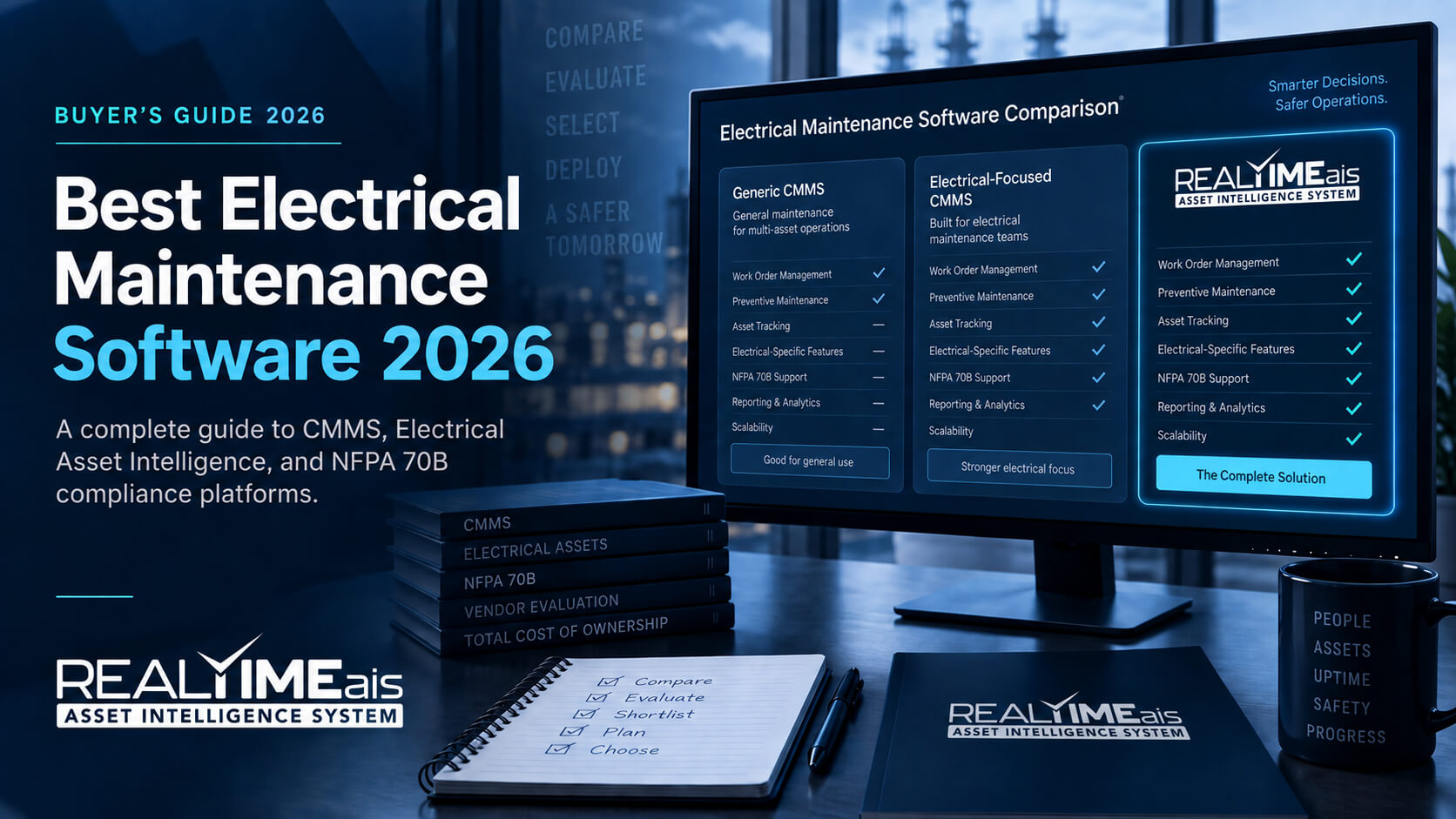
| Capability | Generic CMMS | Electrical Asset Intelligence |
|---|---|---|
| Condition Assessment | Not supported natively -requires custom fields | Built-in 3-tier system per NFPA 70B |
| Maintenance Scheduling | Static, calendar-based intervals | Dynamic, condition-driven intervals |
| Arc Flash Data | Not supported | Full IEEE 1584 dataset per asset |
| Sensor Integration | Not supported | Live feeds from IR, HSM, PQ sensors |
| NFPA 70B Compliance | Manual tracking with custom workarounds | Automated scoring, scheduling, reporting |
| Electrical Topology | Flat asset tree | Hierarchical system mapping |
| Safety Training | Not included | Integrated LMS with OSHA/NFPA courses |
| Audit Trail | Work order history only | Full compliance audit trail with timestamps |
5. Who Needs Electrical Asset Intelligence?
Any organization that owns, operates, or is responsible for maintaining electrical distribution equipment should be evaluating Electrical Asset Intelligence. The most immediate need exists in:
Manufacturing plants, where electrical failures cause production downtime measured in tens of thousands of dollars per hour and where dense motor control centers and switchgear require systematic condition monitoring.
Healthcare facilities, where electrical reliability is literally a matter of life and death, where Joint Commission and CMS regulations add additional compliance layers, and where redundant power systems create complex maintenance requirements.
Data centers, where even momentary power interruptions can cause cascading failures across thousands of servers, where SLA penalties for downtime can exceed millions of dollars, and where thermal management of electrical distribution is a 24/7 operational concern.
Food and beverage processing facilities, where electrical equipment operates in harsh environments (moisture, temperature extremes, washdown chemicals) that accelerate deterioration and where FDA and USDA regulations create additional documentation requirements.
Commercial real estate and institutional campuses, where building owners and facility managers are responsible for electrical infrastructure across multiple buildings and where insurance carriers are increasingly requiring documented maintenance programs.
Electrical contractors and engineering firms, who serve these industries and need tools that match the sophistication of the equipment they maintain and the standards they help their clients meet.
6. Getting Started with Electrical Asset Intelligence
The transition from reactive maintenance, spreadsheets, or generic CMMS to a purpose-built Electrical Asset Intelligence platform does not require a multi-year IT project. REALTIMEais is a cloud-based SaaS platform that can be deployed in days, not months. A typical implementation follows three stages:
Stage 1: Asset Discovery and Import
Upload your existing equipment data – from spreadsheets, existing CMMS exports, single-line diagrams, or arc flash study reports. REALTIMEais structures this data into a proper electrical asset hierarchy with condition scoring ready to populate.
Stage 2: Baseline Assessment
Conduct initial condition assessments on your critical electrical equipment using visual inspection, infrared thermography, and available test data. REALTIMEais assigns condition levels and immediately generates a compliant maintenance schedule based on the results.
Stage 3: Continuous Operation
With your assets loaded and baseline assessments complete, the system takes over – scheduling maintenance activities, ingesting live monitoring data, updating condition scores, generating compliance reports, and alerting your team when equipment requires attention. The longer the system operates, the more intelligent it becomes as historical data accumulates and trend analysis sharpens.
⸻
See Electrical Asset Intelligence in Action
REALTIMEais is The Electrical Intelligence System™ – the only platform that delivers all five pillars of Electrical Asset Intelligence in a single, cloud-based environment. Purpose-built for NFPA 70B. Designed for electrical professionals. Trusted by facilities that cannot afford equipment failure.
Request a Demo Today
Call 866-558-4313 | Visit realtimeais.com/demo